In a shocking turn of events on a typical day, a bus full of passengers experienced a bizarre incident. While silently cruising along, one alert passenger noticed something strange on the driver’s coat. To his absolute disbelief, he discovered hundreds of insects crawling all over the driver’s neck and ears!
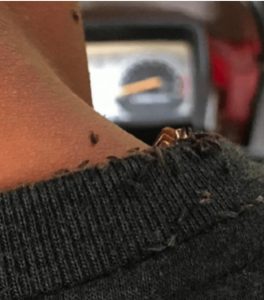
The passenger, named Primo Onipa, couldn’t believe his eyes. He quickly took out his phone and recorded the entire event. Filled with disgust and outrage, he shared the footage on Facebook, describing the insects as lice. He wanted to expose the situation and hold the bus driver accountable for his lack of hygiene.
According to Primo, the bus driver emitted an unpleasant odor and appeared to have not bathed or changed his clothes for more than a year. In the shocking photos, the driver seemed unfazed by the infestation, as if these little parasites had become a part of his daily life.
The video quickly gained attention on social media, causing a wave of outrage from internet users. Many expressed their concern that a man with lice should not be responsible for the safety and well-being of passengers on a bus.
But what exactly are lice? These microscopic insects live on the scalp and survive by feeding on blood. When they feast, they inject saliva into the skin, causing the irritating itch that we all dread.
Lice are about the size of sesame seeds and have a grayish-brown color. The female louse secretes a chemical to ensure the attachment of the eggs to the hair, typically at the base, around 3-4 millimeters from the scalp. They often reside behind the ears and in the neck area, where itching may initially be absent. However, scratching can lead to secondary infections.
Spotting lice can be incredibly challenging since they are tiny and agile. However, with some perseverance, they can be “caught” by covering the infested area with sticky tape. These pesky insects can have a devastating impact on a person’s self-esteem and self-image.
Contrary to popular belief, lice are not indicative of poverty or poor hygiene. They can affect anyone, regardless of cleanliness. The main concern is that they can spread various illnesses and are easily transmitted from person to person.
We can only imagine the horror and discomfort that both the passengers and the driver experienced during this incident. Unfortunately, the original video has been taken down, but let’s hope that the message reaches everyone. It serves as a reminder to prioritize personal hygiene and ensure a safe and clean environment for all.